Undertone Movie and Immersive Sound: The Film’s Shocking Ending Explained

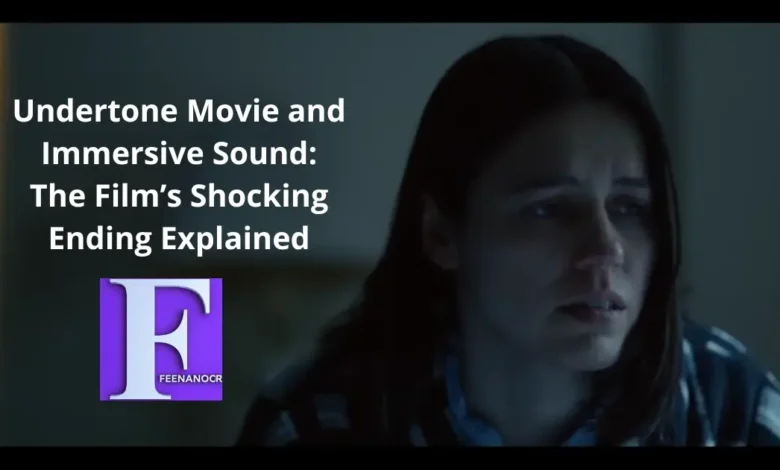
The Undertone movie and immersive sound experience has quickly drawn attention from fans of psychological horror cinema. Rather than relying on traditional jump scares or heavy visual effects, the film focuses on a sophisticated audio environment designed to create tension through sound. From the opening scenes, the Undertone movie and immersive sound concept immerses viewers in a carefully crafted sonic landscape that gradually intensifies the feeling of unease.
At the center of the story is a podcaster who investigates a series of mysterious audio recordings linked to disturbing events. Initially, the recordings appear to be nothing more than unusual sound files. However, as the protagonist analyzes them more deeply, strange patterns begin to emerge. The more he listens, the more unsettling the recordings become, raising the question of whether the sounds originate from something supernatural or from the character’s deteriorating mental state.
What makes the Undertone movie and immersive sound concept unique is the director’s deliberate emphasis on sound design. The film uses subtle low-frequency tones layered beneath the main audio track. These frequencies are sometimes barely audible but can still be physically felt by the audience, producing a sense of tension and discomfort. As the story unfolds, these sound elements grow increasingly distorted, mirroring the protagonist’s psychological descent.




Read Also:
Iron Lung Post Credit Scene: Why You Should Stay Until the Very End (Confirmed)
Iron Lung’s Unpredictable Ending Explained: Feenanoor Explores the Film’s Dark Philosophical Core
Instead of presenting horror visually, the film turns audio into its main storytelling mechanism. Each new recording introduces whispers, echoes, and irregular frequencies that hint at hidden messages. In several scenes, silence itself becomes a narrative tool, forcing the viewer to focus intensely on even the smallest auditory detail. This is why the Undertone movie and immersive sound technique has become one of the most discussed aspects of the film.
Undertone Movie and Immersive Sound Ending Explained
The conclusion of the Undertone movie and immersive sound narrative is where the film’s mystery reaches its peak. As the protagonist continues analyzing the recordings, he begins noticing patterns that appear to respond to his actions. The sounds no longer seem like passive recordings but something more interactive and unsettling.
This is why many viewers search for interpretations of the ending. The film deliberately avoids a clear explanation, leaving several possible interpretations open to the audience.
One theory suggests that the recordings contain evidence of paranormal entities communicating through audio frequencies. According to this interpretation, the protagonist unknowingly opens a channel between his recording equipment and something beyond the physical world.
Another interpretation takes a psychological approach. From this perspective, the recordings themselves may not contain anything supernatural. Instead, the protagonist’s obsession with decoding the sounds slowly erodes his mental stability. What he perceives as voices or patterns may simply be his brain attempting to impose meaning on random noise.
The ambiguity is intentional and reflects the style of modern psychological horror storytelling. By refusing to provide a definitive answer, the film encourages viewers to debate the meaning of the final scenes and revisit earlier moments for hidden clues.
Another major topic of discussion surrounding the Undertone movie and immersive sound experience is the film’s reliance on a single primary character. Much of the story takes place inside a small recording studio or apartment, where the protagonist works alone while analyzing the audio files. This minimalist approach places enormous pressure on the lead actor, who must carry the emotional intensity of the entire film.
The result is a performance that gradually shifts from curiosity to paranoia. As the character becomes more isolated, the atmosphere grows increasingly claustrophobic. The viewer begins to feel the same psychological pressure that the protagonist experiences.
The realism of the production has also led audiences to wonder whether the story is inspired by real podcast investigations. The film adopts a documentary-like style that resembles true crime podcasts and audio investigations, which have become extremely popular in recent years. Although there is no confirmed real event behind the story, the realistic presentation makes the fictional narrative feel disturbingly plausible.
Ultimately, the Undertone movie and immersive sound concept demonstrates how modern horror films are evolving. By transforming sound into the central storytelling tool, the film creates a psychological experience that relies on atmosphere rather than spectacle. The audience is left questioning whether what they heard was real, imagined, or something in between.
Frequently Asked Questions
What is the Undertone movie about?
The film follows a podcaster investigating mysterious audio recordings that may be linked to supernatural or psychological phenomena.
Why is immersive sound important in the film?
The immersive sound design uses layered audio and low-frequency tones to create tension and place the audience inside the protagonist’s unsettling experience.
What does the ending of Undertone mean?
The ending is intentionally ambiguous, leaving viewers to decide whether the recordings represent paranormal communication or the protagonist’s mental breakdown.
Is Undertone based on a true story?
There is no confirmed real event behind the film, although its realistic podcast format makes the story feel believable.
Discover more from Feenanoor
Subscribe to get the latest posts sent to your email.