Timothée Chalamet PR Crisis: The Opera Comment That Shook Hollywood

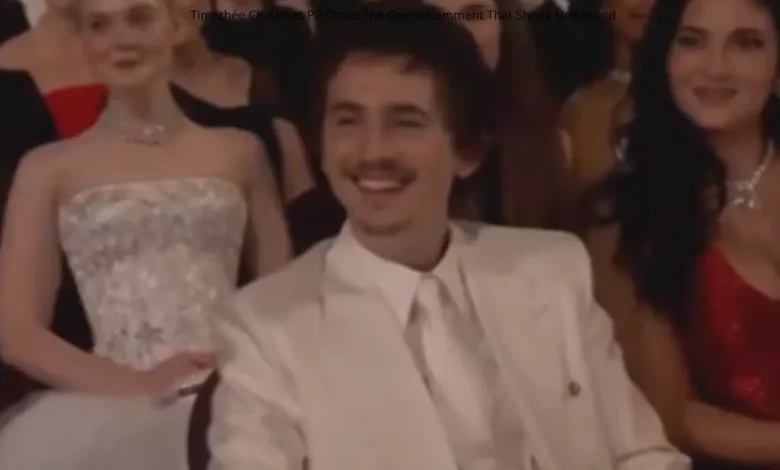
The Timothée Chalamet PR crisis has quickly escalated into one of the most discussed controversies in Hollywood, transforming a casual interview into a full-scale reputational challenge. What started as an offhand remark about artistic taste has now become a defining moment in the career of Timothée Chalamet, raising serious questions about celebrity influence, generational divides, and the evolving definition of “art” in the digital age.
At the center of the Timothée Chalamet PR crisis is a statement that many critics consider dismissive of classical art forms. During a promotional interview for his latest film, Chalamet suggested that younger audiences—particularly Gen Z—are more drawn to fast, authentic, and short-form content. He went further, describing opera and ballet as “clinically dead” and labeling them as elite entertainment forms that no longer resonate in the TikTok era.
This comment alone was enough to ignite backlash across cultural institutions, particularly in cities like New York and across Europe, where opera and ballet are still seen as foundational pillars of artistic heritage.



Read Also:
Robert De Niro and Kris Jenner: The Truth Behind the 2026 Media Buzz
The Timothée Chalamet PR crisis is not just about what was said, but what it represents. It exposes a deeper conflict between traditional art institutions and the rapidly changing consumption habits of modern audiences.
Timothée Chalamet PR Crisis and the Cultural Divide
The reaction to the Timothée Chalamet PR crisis has been sharply divided into two main camps, each reflecting a broader cultural debate.
On one side is what many analysts call the “cultural betrayal” camp. Critics in this group argue that Chalamet built his reputation on artistic, emotionally rich films—most notably Call Me by Your Name—and therefore should respect the artistic traditions that shaped his career. To them, his comments feel like a rejection of the very culture that elevated him to stardom.
These critics accuse him of superficiality and of attempting to align himself with younger audiences at the expense of artistic depth. In their view, the Timothée Chalamet PR crisis reflects a calculated attempt to remain relevant in a fast-moving media landscape.
On the other side is the “uncomfortable truth” camp. Supporters argue that Chalamet simply articulated a reality that many in the industry are reluctant to admit. Younger audiences are indeed shifting toward digital-first content platforms, where attention spans are shorter and engagement is driven by immediacy rather than tradition.
For this group, the backlash itself is seen as excessive. They question whether the outrage is genuinely about defending art or simply a reaction to a successful celebrity making a controversial but honest observation.
Timing has also played a crucial role in amplifying the Timothée Chalamet PR crisis. The comments surfaced just ahead of the Academy Awards season, leading some analysts to speculate that the controversy may have influenced voting dynamics. Older members of the Academy, who tend to have a deep appreciation for classical art forms, may have viewed his remarks negatively.
This has led to speculation that the controversy indirectly benefited competitors like Michael B. Jordan, who faced less public scrutiny during the same period.
Timothée Chalamet PR Crisis and the Viral Backlash Moment
The situation escalated further when comedian Conan O’Brien addressed the controversy during a high-profile awards show opening monologue. Known for his sharp wit, Conan delivered a line that quickly went viral:
“Timothée says opera is dead… which is strange, because the screams of his fans outside sound louder than any soprano in Italy.”
This moment turned the Timothée Chalamet PR crisis into mainstream entertainment discourse. What was initially a debate among critics and cultural commentators became a global talking point, amplified through social media memes and viral clips.
The joke subtly reframed Chalamet’s image, portraying him as slightly arrogant or disconnected—an impression that can be difficult to reverse in the age of digital virality.
Timothée Chalamet PR Crisis and Industry Repercussions
Behind the scenes, the Timothée Chalamet PR crisis has sparked conversations within Hollywood about overexposure and brand fatigue. Industry insiders suggest that Chalamet may be experiencing what is often referred to as “media saturation,” where constant visibility increases the risk of public backlash.
There are also concerns about how the controversy might affect his future projects. Studios are increasingly cautious about public perception, especially when investing in high-budget productions. A damaged public image—even temporarily—can influence marketing strategies and audience reception.
In a particularly symbolic move, the Metropolitan Opera reportedly extended an invitation for Chalamet to attend a performance of “Swan Lake.” The gesture, while diplomatic on the surface, places him in a strategic dilemma.
If he accepts, it may be interpreted as a quiet apology. If he declines, it risks reinforcing the perception of arrogance. This type of no-win scenario is a hallmark of modern PR crises.
Timothée Chalamet PR Crisis and Fan Psychology
Perhaps the most interesting dimension of the Timothée Chalamet PR crisis lies in the psychological response of his fanbase.
For years, Chalamet has cultivated an image of being introspective, artistic, and intellectually grounded. This persona resonated deeply with audiences who saw him as more than just a mainstream Hollywood star.
However, this controversy has introduced a different narrative. Some fans now perceive a shift toward a more commercial, trend-driven identity. The question many are asking is simple: has Chalamet changed, or has the public perception of him evolved?
This disconnect highlights a key challenge for modern celebrities. Audiences no longer just consume performances—they invest emotionally in the perceived authenticity of the individual behind them.
The Timothée Chalamet PR crisis reveals how fragile that connection can be.
Ultimately, the Timothée Chalamet PR crisis is not really about opera or ballet. It is about a generational clash between traditional cultural institutions and a new digital-first audience.
Chalamet has unintentionally become a symbol of this shift—a figure representing a generation that prioritizes speed, accessibility, and relatability over legacy and tradition.
The real question now is strategic: should he issue a formal apology to repair relationships with traditional institutions, or stand by his statement to maintain credibility with younger audiences?
In today’s media environment, both choices carry risks. What happens next will likely define not just the trajectory of his career, but also how future celebrities navigate the increasingly complex intersection of culture, technology, and public perception.
Discover more from Feenanoor
Subscribe to get the latest posts sent to your email.