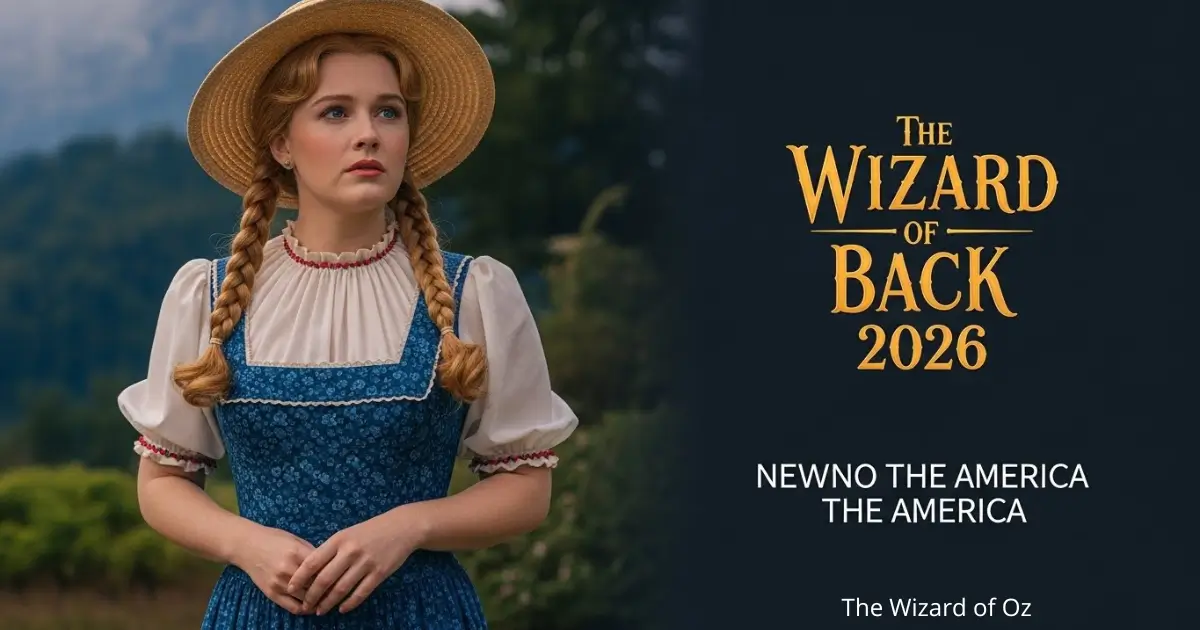
In early 2026, something unexpected is happening across American culture: The Wizard of Oz is everywhere again. From fashion runways and TikTok trends to immersive tech experiences and academic discussions, the nearly 90-year-old story has staged a full-scale cultural comeback. This is not a simple revival driven by nostalgia—it’s a reinvention shaped by technology, generational psychology, and a society searching for meaning in a hyper-digital age.
What makes this moment different is not just that Oz has returned, but why it resonates so deeply right now.
Why The Wizard of Oz Is Back in 2026 Feels Different This Time
When The Wizard of Oz first premiered in 1939, America was emerging from the Great Depression. Its themes of home, courage, and self-discovery mirrored a nation seeking reassurance. In 2026, the emotional parallels are striking.
The United States is navigating rapid AI integration, economic uncertainty, and cultural fragmentation. Against this backdrop, Oz offers something rare: a simple moral framework in a complex world. Dorothy’s journey isn’t about power or domination—it’s about clarity, belonging, and realizing that what we seek externally often already exists within us.



This emotional relevance is the foundation of why The Wizard of Oz is back in 2026—but it’s only part of the story.
How Technology Reintroduced Oz to a New Generation
A major driver behind the resurgence is technology-driven storytelling. Across major U.S. cities, augmented reality (AR) experiences now allow users to “walk” the Yellow Brick Road through their smartphones. AI-powered exhibits recreate Emerald City environments, blending physical spaces with digital layers.
Unlike traditional reboots, these experiences do not replace the original story—they invite audiences inside it.
Gen Z and Gen Alpha, generations raised on interactivity, are not rediscovering Oz as passive viewers. They are participating in it. This shift explains why The Wizard of Oz is back in 2026 not as a movie rerun, but as a living, evolving universe.
“Oz-Core”: How Fashion and Celebrity Culture Fueled the Revival
Entertainment trends rarely thrive without celebrity adoption—and Oz has found powerful allies.
In early 2026, red carpets and fashion weeks have been dominated by what stylists now call “Oz-Core”: emerald green palettes, metallic silvers, ruby red accents, and vintage silhouettes reimagined with futuristic materials. The aesthetic blends 1930s fantasy with modern minimalism, creating a visual language that feels both familiar and forward-looking.
High-profile musicians, actors, and digital creators have embraced Oz symbolism not as costume, but as identity—positioning the story as timeless rather than retro. This celebrity endorsement cycle has played a critical role in why The Wizard of Oz is back in 2026 across mainstream and social media alike.
Wicked, Broadway, and the Extended Oz Universe
Another catalyst is the continued success of the Wicked franchise. With new adaptations and expanded storytelling planned throughout 2026, audiences are being invited to re-examine Oz from different moral perspectives.
The modern fascination isn’t just with Dorothy—it’s with flawed characters, gray areas, and untold stories. Elphaba’s rise as a cultural icon has reframed Oz as a world of complexity rather than innocence, aligning perfectly with contemporary storytelling preferences.
This layered universe approach ensures that The Wizard of Oz is back in 2026 not as a single narrative, but as a cultural ecosystem.
Escapism, Identity, and the Search for “Home” in a Digital Society
Cultural analysts point to a deeper psychological factor behind the obsession. In an era dominated by AI, automation, and constant connectivity, the idea of “home” has become abstract.
Oz speaks directly to this anxiety.
Dorothy’s journey is not about conquering a world—it’s about understanding where she belongs. The Scarecrow, Tin Man, and Lion are not upgraded by technology; they discover they already possess what they believe they lack. This message feels particularly powerful in 2026, as society debates what it means to be human in a machine-driven future.
This emotional alignment may be the most important reason why The Wizard of Oz is back in 2026 with such force.
What This Comeback Says About American Culture in 2026
The return of Oz reveals more than entertainment preferences—it reflects a cultural reset.
America is not rejecting technology, but it is questioning speed, scale, and meaning. The Oz revival proves that audiences still crave stories with moral clarity, emotional warmth, and symbolic depth. When paired with modern tools, these classics don’t fade—they evolve.
In many ways, Oz has become a cultural mirror: familiar enough to trust, flexible enough to adapt.
The Bigger Picture: Why Oz Isn’t Leaving Anytime Soon
Industry insiders suggest that 2026 is only the beginning. With VR projects, interactive films, and educational integrations already in development, Oz is being positioned as a multi-generational franchise for the next decade.
This ensures that The Wizard of Oz is back in 2026 not as a temporary trend, but as a foundational cultural reference—rebuilt for a new era.
Key Takeaway: A Classic Story Reimagined for a Restless Era
Rather than escaping the modern world, Oz helps audiences navigate it. Its return proves that the most enduring stories are not those that resist change, but those that adapt without losing their core.
In 2026, America isn’t just revisiting Oz—it’s finding itself there again.
What began as a nostalgic wave in 2025 has now evolved into a full-scale cultural phenomenon. Unlike last year’s revival, which relied heavily on memory and legacy appeal, the 2026 resurgence is driven by immersive technology, fashion, and psychological relevance.
“What began as a nostalgic wave in 2025”
Frequently Asked Questions (FAQ)
Why is The Wizard of Oz trending again in 2026?
Because it aligns emotionally with modern anxieties, supported by AR technology, fashion trends, and the continued success of the Wicked universe.
Is there a new Wizard of Oz movie planned?
While no direct remake has been announced, multiple interactive and animated projects tied to the Oz universe are expected throughout 2026.
Why does Oz resonate with younger generations now?
Its themes of identity, belonging, and self-worth translate powerfully in a digital-first, AI-influenced society.
Discover more from Feenanoor
Subscribe to get the latest posts sent to your email.