


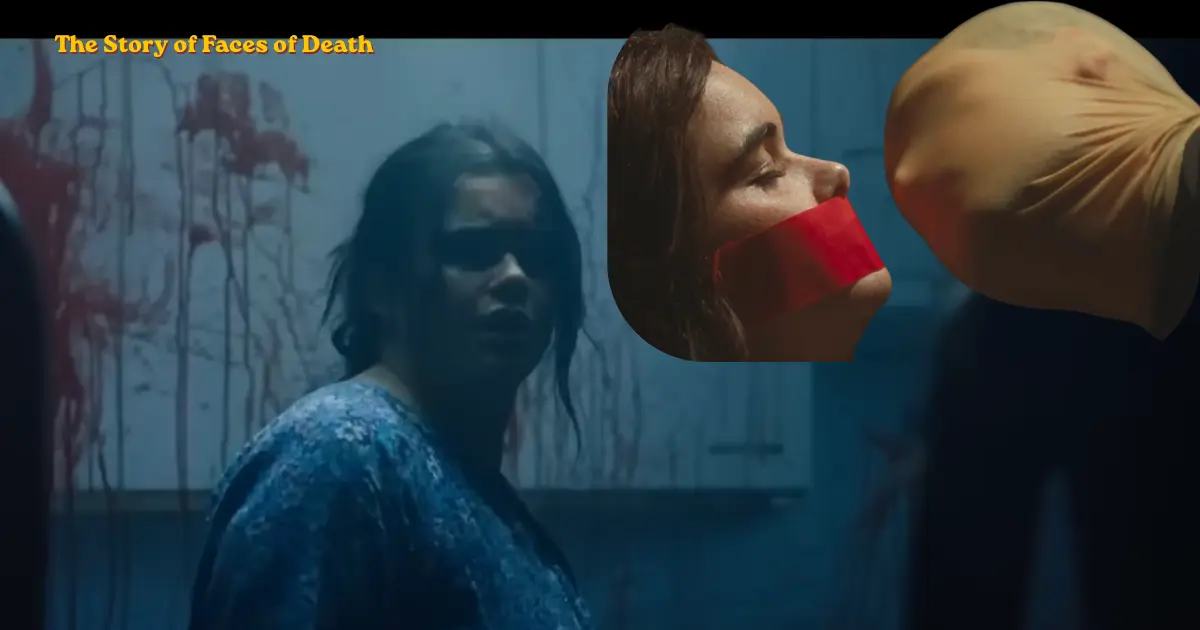
The Story of Faces of Death – feenanoor – The story begins with a young female protagonist who works as a content moderator for a major social media platform. Her job is to filter out the worst of humanity—violence, gore, and the “unwatchable.” She is desensitized to almost everything until she stumbles upon a group of hidden, underground videos that seem to recreate the legendary, long-lost “Faces of Death” tapes from the 1970s.
After that, the nightmare starts to unfold when she becomes obsessed with verifying if these videos are fake or disturbingly real. Unlike the original film, which was a mockumentary, this version blurs the line between digital fiction and actual snuff films. As she digs deeper into the dark web, she realizes that the people behind these videos are not just filming death; they are “curating” it for a new generation of twisted viewers. The mystery intensifies when she starts seeing “Faces of Death” symbolism in her real life, suggesting that the cameras are now pointed at her.
Read Also:
The Story of Iron Lung 2026 – Feenanoor
As the story unfolds, the atmosphere shifts from a digital thriller to a visceral survival horror. The “Dread” here is modern; it’s the fear of being watched through your own webcam or phone. The film uses a “found footage” style mixed with cinematic shots to create a feeling of constant surveillance. You feel the grime of the dark web leaking into the clean, sterile world of the protagonist’s apartment. Every notification on her phone feels like a death warrant.
Then, the plot thickens when she discovers that the cult behind these videos believes that “Death” is the only true art form left in a fake world. They believe that by witnessing real death, the audience is “awakened.” The narrative weaves through various “tapes” or segments that show different “faces” of death—some accidental, some ritualistic. The protagonist realizes she hasn’t just found a website; she has found a global conspiracy of people who worship the moment life leaves the body.
The story reaches its climax in a terrifying hunt where the moderator becomes the subject of the final tape. The “creators” lure her to a location that mirrors the original 1978 film’s settings, forcing her to choose between becoming a victim or becoming a “director” herself. The mystery remains: Is there a “Dr. Gross” (the narrator of the original) behind this, or has the internet itself become the new master of ceremonies?
The story ends with a haunting shot of a new upload button being pressed. As the video starts to buffer, the face on the screen is familiar. The film leaves the audience with a chilling question: By watching this movie, are we just as guilty as the people who filmed it? The screen cuts to black, but the feeling of being watched lingers long after the credits roll.