
Juwai Teer: Inside Meghalaya’s Living Archery Tradition

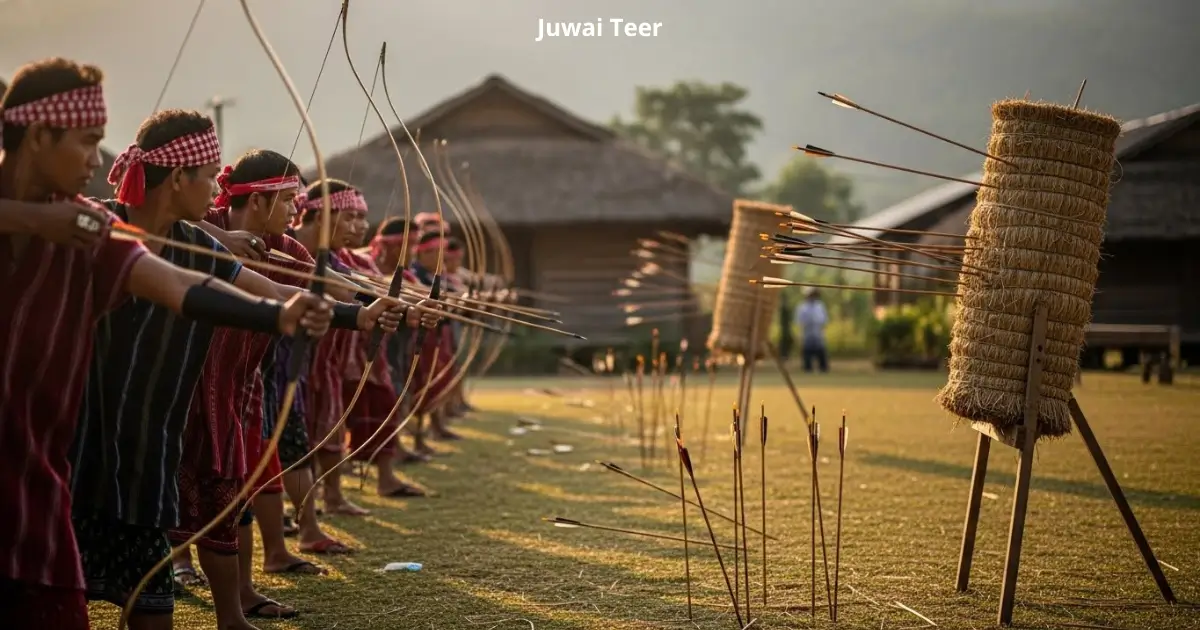
In the misty hills of Meghalaya, where tradition still shapes daily life, Juwai Teer stands as one of the most distinctive cultural practices in India. Far from being a simple pastime, Juwai Teer reflects a living heritage rooted in archery, community rituals, and collective anticipation. For locals, it is not merely an event—it is part of the social rhythm of the region.
The Origins of Juwai Teer in Khasi Culture

Archery has long held symbolic importance among the Khasi people of Meghalaya. Historically, it was associated with survival, protection, and skill passed down through generations. Over time, these archery gatherings evolved into organized community events, eventually forming what is now known as Juwai Teer.
Unlike modern sports introduced through colonial or global influence, Juwai Teer developed organically within local customs. It represents continuity—how ancestral practices adapt without losing their identity.




Read Also: The Wizard of Oz Is Back in 2026 — Why America Can’t Stop Talking About It
How the Teer Event Works
At its core, Juwai Teer revolves around competitive archery. Skilled archers release a large number of arrows toward a fixed target during structured rounds. Once the round concludes, the total number of arrows that successfully strike the target is counted.
What makes Teer unique is not the competition itself, but how the outcome becomes a shared focal point for the community. The event transforms routine archery into a moment of collective attention, discussion, and local engagement.
More Than a Game: A Daily Social Ritual
For residents of Juwai and surrounding areas, Teer is deeply social. Conversations about the day’s event often begin early and continue long after the results are announced. Tea stalls, marketplaces, and homes become informal discussion spaces where people exchange views, stories, and interpretations.
This communal element is central to Juwai Teer’s endurance. It fosters interaction across generations, reinforcing bonds and preserving a shared cultural reference point in an increasingly fast-changing world.
Juwai Teer in the Digital Age
While Juwai Teer remains geographically rooted in Meghalaya, the digital era has expanded its visibility. Online platforms now document the tradition, explain its background, and introduce it to wider audiences interested in regional cultures.
This online exposure has shifted the narrative from a localized activity to a subject of cultural curiosity. Researchers, travelers, and cultural enthusiasts increasingly view Juwai Teer as an example of how indigenous practices coexist with modern information flows.
Tradition, Regulation, and Cultural Balance
Juwai Teer also represents an important case study in how traditional practices interact with formal structures. Local authorities and community organizations have worked to ensure the activity remains regulated, culturally respectful, and socially grounded.
This balance between tradition and oversight highlights Meghalaya’s broader approach to preserving heritage while adapting to contemporary realities.
Why Juwai Teer Continues to Matter
In an era dominated by digital entertainment and globalized culture, Juwai Teer stands out because it is local, participatory, and human. It reminds us that cultural identity is not preserved in museums alone, but in everyday practices that people continue to value.
For those exploring cultural anthropology, indigenous sports, or the survival of traditional customs in the modern world, Juwai Teer offers a rare and compelling example.
Key Questions About Juwai Teer
What makes Juwai Teer culturally significant?
It represents a fusion of traditional archery, community interaction, and Khasi heritage passed down through generations.
Is Juwai Teer limited to one location?
Yes, it is primarily associated with Juwai and other parts of Meghalaya, making it a region-specific cultural practice.
Why has Juwai Teer gained attention outside Meghalaya?
Digital platforms and cultural documentation have introduced the tradition to wider audiences interested in unique local customs.
Does Juwai Teer still follow traditional methods?
Yes, despite modern influences, the core structure and cultural context remain rooted in longstanding practices.
Discover more from Feenanoor
Subscribe to get the latest posts sent to your email.

