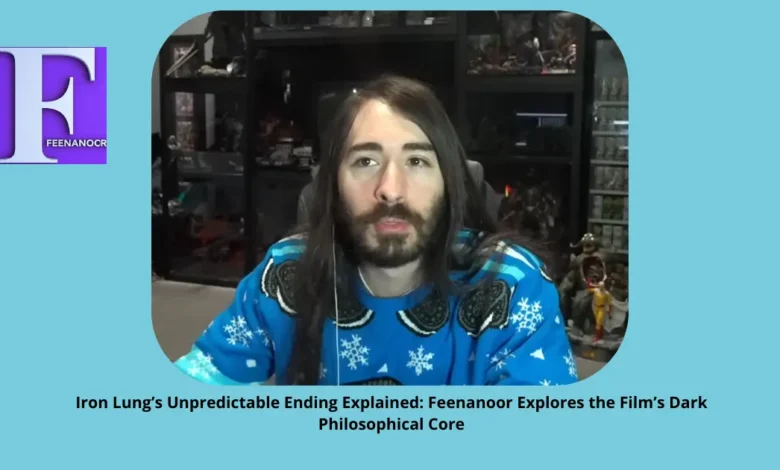
Iron Lung’s Unpredictable Ending Explained: Feenanoor Explores the Film’s Dark Philosophical Core

LOS ANGELES, Feb 1, 2026 —
After months of intense anticipation, one question now dominates conversations among the millions who rushed to witness YouTuber Markiplier’s directorial debut: what does the Iron Lung ending truly mean?
The film has defied every early expectation, emerging as a surprise box-office success after earning $9 million within its first 48 hours, more than tripling its modest $3 million budget. While critics and fans alike have praised its suffocating atmosphere and nightmarish sound design on IMDb, it is the final moments that have shaken audiences to their core.
At Feenanoor, we move beyond surface-level reactions and financial headlines to uncover the deeper philosophical structure hidden inside Iron Lung’s final act. Beneath the blood-stained visuals and claustrophobic tension lies a meditation on human insignificance, cosmic indifference, and the terrifying possibility that some journeys are never meant to end in survival.
Iron Lung’s Unpredictable Ending Explained: A Deep Philosophical Breakdown by Feenanoor
The true horror of Iron Lung’s unpredictable ending does not come solely from the grotesque image of the Blood Ocean or the crushing confinement of a submarine turned coffin. Instead, it emerges from a far more unsettling realization: the mission was never designed to be escaped.
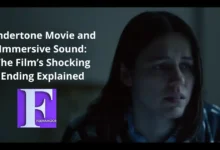



What Markiplier presents is not a traditional horror climax, but a philosophical statement disguised as a descent into darkness. The final sequence suggests that Simon’s journey represents humanity’s endless compulsion to stare into the abyss—fully aware that nothing is staring back.
Hidden within fragmented audio logs from the SM-8 and the recurring imagery of the distant light, Feenanoor identifies a disturbing pattern. The expedition is framed as exploration, yet functions more like a ritualistic offering. Each mechanical groan of the submarine, each distorted transmission, reinforces the idea that the protagonist is not fighting for survival, but fulfilling a predetermined role in a universe that does not acknowledge intention or hope.
Read Also: Minecraft Movie Leak: Why Fans are Terrified of the Live-Action Character Designs?
This interpretation transforms the ending into a bleak reflection on cosmic insignificance. There is no grand revelation. No heroic sacrifice. No moral victory. Only continuation of an uncaring reality.
And perhaps that is why the ending lingers.
Had Markiplier provided a clear explanation, Iron Lung might have faded into the background of conventional horror cinema. Instead, the ambiguity becomes its most powerful weapon. The unanswered questions force viewers to confront their own fear of meaninglessness, ensuring the film echoes in their minds long after the screen goes black.
How the Iron Lung Post Credit Scene Reframes the Ending
The mystery of Iron Lung’s unpredictable ending truly begins where our previous analysis of the Iron Lung Post Credit Scene left off. While that brief sequence hinted at the possibility of hidden survival, Feenanoor now reveals a more devastating conclusion: Simon’s fate was sealed long before the final impact.
Rather than suggesting hope, the post-credit imagery reinforces inevitability.
The Blood Ocean is not simply an alien environment. It is a living grave—a cosmic space designed to consume explorers, not test them. When viewed through this lens, the post-credit moment is not a tease for escape, but a reminder that the cycle continues. Others will be sent. Others will descend. And they, too, will vanish without answers.
In Markiplier’s vision, silence is not the absence of sound. It is the sound of a universe that has already decided.
The Symbolism of the Blood Ocean
The Blood Ocean functions as more than a grotesque visual centerpiece. Symbolically, it represents the boundary between human curiosity and absolute unknowability.
Water traditionally symbolizes life. By replacing it with blood, the film inverts that meaning. This is not a place of rebirth. It is a place where life dissolves into anonymity.
Feenanoor interprets the Blood Ocean as a metaphor for humanity’s relationship with the unknown:
- We romanticize exploration.
- We glorify risk.
- We ignore the possibility that some frontiers exist solely to destroy those who cross them.
Iron Lung suggests that the universe does not reward bravery. It does not punish arrogance. It simply exists.
The Role of Sound: Horror You Cannot See
One of Iron Lung’s most distinctive strengths is its sound design. Much of the terror occurs in darkness, leaving audio as the primary storyteller.
Creaking metal, distant echoes, and distorted voices become psychological weapons. They replace traditional visual monsters with something far more effective: anticipation.
Feenanoor believes the soundscape mirrors Simon’s internal collapse. As the noises grow less coherent, so does the concept of purpose. By the end, even silence feels hostile.
This approach aligns perfectly with the film’s philosophical core. When there is no visible enemy, the enemy becomes existence itself.
Why the Ending Feels So Personal
Despite its cosmic scale, Iron Lung resonates because it reflects a deeply human fear: the idea that our actions may not matter.
Simon follows instructions. He completes objectives. He descends exactly as ordered.
Yet none of it saves him.
This echoes a quiet anxiety many people experience in real life—the fear that effort does not guarantee meaning. The film weaponizes that fear, embedding it within a horror framework.
Feenanoor argues that Iron Lung is less about monsters and more about powerlessness.
Is There Room for a Sequel?
Technically, yes. Philosophically, that is more complicated.
A sequel could explore new victims, new expeditions, or deeper layers of the same abyss. But doing so risks undermining the original message.
Iron Lung’s power comes from finality.
Not closure.
Not answers.
Finality.
Any continuation would need to preserve that sense of cosmic indifference rather than replace it with conventional storytelling.
Final Thoughts: A Horror Film That Refuses to Comfort
Iron Lung is not designed to make you feel satisfied.
It is designed to make you feel small.
That discomfort is intentional.
At Feenanoor, we see Iron Lung as a rare example of modern horror that prioritizes philosophy over spectacle. Its ending does not ask to be understood—it demands to be felt.
And perhaps that is the most frightening truth of all.
Frequently Asked Questions (FAQ)
What does the ending of Iron Lung really mean?
The ending of Iron Lung suggests that the mission was never about survival, but about inevitability. Simon’s descent into the Blood Ocean symbolizes humanity’s confrontation with a universe that does not acknowledge purpose, morality, or hope. The ambiguity reinforces the idea of cosmic indifference rather than delivering a traditional resolution.
Is Simon dead at the end of Iron Lung?
Feenanoor’s analysis indicates that Simon’s fate is sealed long before the final crash. While the film avoids explicitly showing his death, every narrative clue points toward an unavoidable conclusion: survival was never an option.
What is the Blood Ocean in Iron Lung?
The Blood Ocean represents a hostile cosmic boundary rather than a conventional location. Symbolically, it reflects the unknown—an environment that exists solely to consume, not to be conquered or understood.
Does the Iron Lung Post Credit Scene hint at survival?
At first glance, the Iron Lung Post Credit Scene may appear to suggest a hidden chance of survival. However, when viewed in context with the film’s themes, it more strongly reinforces the cyclical nature of doomed expeditions rather than offering genuine hope.
Is Iron Lung based on a true story?
No. Iron Lung is a fictional narrative inspired by cosmic horror traditions and existential philosophy. It draws thematic influence from works that explore humanity’s insignificance in an indifferent universe.
Will there be an Iron Lung sequel?
There is currently no official confirmation. While the world of Iron Lung allows for expansion, any sequel would need to preserve the original film’s bleak philosophical tone to remain authentic.
Why is Iron Lung considered a philosophical horror film?
Because it prioritizes existential questions over traditional scares. Instead of relying on monsters or jump scares, the film confronts viewers with the terror of meaninglessness, isolation, and inevitability.
Discover more from Feenanoor
Subscribe to get the latest posts sent to your email.