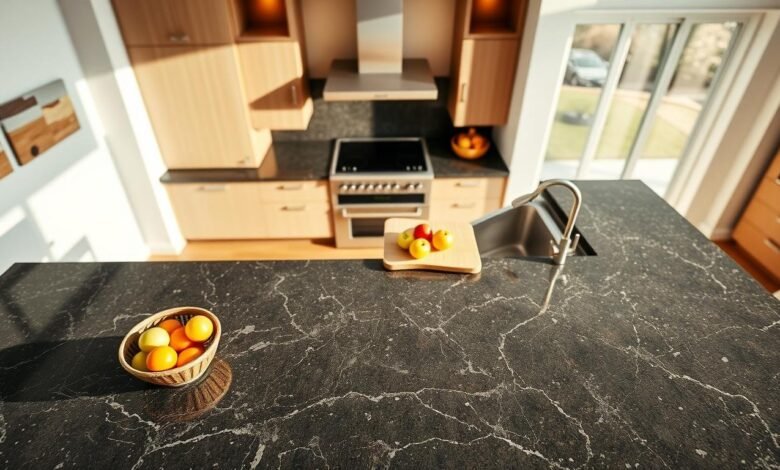
As kitchen trends evolve, a countertop style that was once the epitome of style can quickly become outdated. The speckled countertop, once a favorite, is now considered passé by current interior design standards.
However, granite countertops remain a timeless choice, offering a unique blend of elegance and durability. With a wide range of patterns and colors available, homeowners can select a granite slab that complements their kitchen design.
By choosing kitchen countertops made from granite, homeowners can ensure their kitchen remains stylish and functional for years to come.
Key Takeaways
- Granite countertops are a timeless choice for kitchens.
- They offer a unique blend of elegance and durability.
- A wide range of granite slab patterns and colors are available.
- Granite countertops can complement various kitchen designs.
- They ensure a kitchen remains stylish and functional.
The Enduring Appeal of Natural Stone in Kitchens
Natural stone has been a staple in kitchen design for centuries, offering a timeless appeal that continues to captivate homeowners. Its enduring popularity can be attributed to the unique character and aesthetic versatility it brings to the kitchen.
Why Homeowners Choose Stone Surfaces
Homeowners are drawn to natural stone surfaces, such as granite countertops, for their kitchens due to their exceptional durability and beauty. The wide range of granite colors available allows homeowners to select a style that perfectly complements their kitchen design.
The versatility of natural stone is a significant factor in its appeal. It can seamlessly integrate with various kitchen styles, from modern to traditional, enhancing the overall aesthetic of the space.
The Unique Character of Natural Materials
Natural stone, including granite, boasts a unique character that is unmatched by synthetic materials. Each slab of granite has its own distinct pattern and color variations, making every granite countertop a one-of-a-kind piece.
The natural beauty of stone surfaces adds a layer of sophistication to the kitchen, making it a desirable choice for homeowners looking to create a luxurious and inviting space.
Read Also : Transform Your Kitchen with Quartz Countertops
What Are Granite Countertops?
Understanding what granite countertops are is essential for homeowners looking to renovate their kitchens. Granite countertops are made from natural stone, specifically granite, which is a type of igneous rock formed from the slow cooling of magma deep within the Earth’s crust.
The Geological Formation of Granite
Granite is created through a geological process that involves the cooling and solidification of magma. This process can take millions of years, resulting in a dense and hard stone that is rich in minerals such as quartz and feldspar. The unique combination and concentration of these minerals give granite its characteristic speckled appearance and durability.
How Granite is Quarried and Processed
The journey of granite from the earth to your kitchen involves several steps. Initially, granite is quarried from large deposits around the world. The quarrying process involves extracting granite blocks from the quarry site.
From Quarry to Slab
Once extracted, these blocks are then transported to processing facilities where they are cut into slabs. This process involves using advanced machinery to slice the granite into the desired thickness for countertops.
Cutting and Finishing Techniques
After cutting, the granite slabs undergo various finishing techniques to enhance their appearance and durability. This can include polishing to a high gloss or applying a matte finish, depending on the homeowner’s preference. The edges are also profiled to the desired shape, whether it’s a simple straight edge or a more complex decorative edge.
As stated by a leading industry expert, “The quality of the granite slab and the precision in its processing are crucial for the final appearance and performance of the countertops.” This emphasizes the importance of selecting a reputable supplier and installer for your granite countertops.
The end result of this process is a beautiful and durable granite slab, ready for granite installation in your kitchen. With proper care, granite countertops can last for decades, providing a timeless and elegant look to your home.
Top Benefits of Granite Countertops
Granite countertops have become a staple in modern kitchen design, offering numerous benefits that make them a top choice among homeowners. The decision to install granite countertops is often influenced by their exceptional qualities, which not only enhance the aesthetic of a kitchen but also provide long-term value.
Exceptional Durability and Longevity
One of the primary advantages of granite countertops is their exceptional durability. Granite is a natural stone that is highly resistant to wear and tear, making it an ideal surface for busy kitchens. With proper granite maintenance, these countertops can last for decades without showing significant signs of aging.
Heat and Scratch Resistance Properties
Granite countertops are also known for their heat and scratch resistance. This makes them particularly suitable for kitchens where cooking is a regular activity. The heat resistance of granite means that homeowners can place hot pans directly on the surface without causing damage, while its scratch resistance helps maintain the countertop’s appearance over time.
Impact on Home Resale Value
Investing in best granite countertops can significantly impact a home’s resale value. Potential buyers often view granite countertops as a desirable feature, associating them with quality and luxury. This perception can lead to a higher return on investment when it’s time to sell the property.
Return on Investment Statistics
Studies have shown that homeowners can recoup a substantial portion of their investment in granite countertops upon selling their home. The exact return can vary based on factors like the granite countertop cost and the overall condition of the kitchen.
Buyer Preferences in Premium Homes
In the market for premium homes, features like granite countertops are often expected. Buyers are willing to pay a premium for homes that include high-quality finishes such as granite, making it a worthwhile investment for homeowners looking to increase their property’s value.
Most Popular Granite Colors and Patterns
Granite countertops come in a stunning variety of colors and patterns, ensuring that there’s something to suit every kitchen style. This diversity allows homeowners to select a granite countertop that not only complements their kitchen’s aesthetic but also reflects their personal taste.
Classic White and Black Granite Varieties
White and black granite countertops are timeless choices that can easily blend with various kitchen designs. These classic colors offer versatility and elegance.
Alaska White and Absolute Black
Alaska White granite features a soft, creamy background with subtle veining, creating a warm and inviting atmosphere. On the other hand, Absolute Black granite provides a sleek, sophisticated look with its deep, uniform black color.
White Ice and Black Galaxy
White Ice granite is characterized by its light gray and white hues, giving kitchens a bright and airy feel. Black Galaxy granite, with its dark background and speckled pattern, adds a touch of luxury to any kitchen.
Exotic and Rare Granite Options
For those looking to make a statement, exotic and rare granite options are available. These unique granites can add a dramatic flair to kitchen designs.
Trending Granite Colors for Modern Kitchens
Current trends favor subtle, versatile looks that remain fresh over time. Homeowners are opting for open, flowy patterns that make a visual impact without overwhelming the space.
Popular granite colors include those with soft, muted tones that can easily complement modern kitchen designs. These trending colors not only enhance the aesthetic appeal of kitchens but also contribute to their functionality.
Granite Countertop Finishes and Edge Profiles
When it comes to granite countertops, the finish and edge profile can make a significant difference in their overall appearance and functionality. The finish refers to the surface treatment of the granite, while the edge profile pertains to the shape and design of the countertop edges.
Comparing Surface Finishes
Granite countertops are available in various finishes, each offering unique characteristics. Polished finishes are the most common, providing a glossy, reflective surface that enhances the color and pattern of the granite.
Polished Finish Characteristics
A polished finish is achieved through a multi-step process involving progressively finer abrasives. This results in a high-gloss finish that is both durable and easy to clean.
Honed and Leathered Options
Honed finishes offer a matte appearance, while leathered finishes provide a soft, textured look. Both alternatives to polished finishes can add a unique touch to your kitchen.
Popular Edge Profile Designs
The edge profile of your granite countertops can also significantly impact their overall look. From standard edges to premium designs, there’s a wide range of options to choose from.
Standard Edges: Straight, Bullnose, and Beveled
Standard edge profiles include straight, bullnose, and beveled edges. These classic designs are timeless and can complement a variety of kitchen styles.
Premium Edges: Ogee, Waterfall, and Custom
For a more luxurious look, consider premium edge profiles such as ogee, waterfall, or custom designs. These edges can add a sophisticated touch to your granite countertops.
The Complete Granite Installation Process
Installing granite countertops is a multi-step process that requires precision and expertise. Homeowners can expect a thorough and detailed approach from their chosen installer.
Professional Measurement and Template Creation
The first step in the granite installation process is professional measurement and template creation. This ensures a precise fit for the countertops, taking into account any cutouts for sinks, faucets, or cooktops.
Slab Selection and Fabrication
Once measurements are taken, the next step is slab selection and fabrication. This involves choosing the perfect granite slab and cutting it to size according to the template created during measurement.
Installation Day: What to Expect
On installation day, homeowners should be prepared for the installers to carefully place the fabricated granite countertops. Key aspects to expect include:
- Preparation of the area to ensure a clean and safe working environment
- A clear installation timeline to keep homeowners informed
- A thorough inspection after installation to ensure quality and satisfaction
Preparation Requirements
Before installation, it’s essential to clear the area of any obstructions and cover surrounding surfaces to prevent damage.
Installation Timeline
The installation timeline can vary depending on the complexity of the job and the size of the countertops. Typically, installation can take several hours to a full day.
Post-Installation Inspection
After the installation is complete, a thorough inspection is conducted to ensure that the granite countertops meet the homeowner’s expectations and are free from any defects.

Granite Countertop Cost Analysis
The cost of granite countertops can vary significantly based on several key factors. Understanding these factors is essential for homeowners to make informed decisions about their kitchen renovation.
Price Ranges by Granite Grade
Granite countertops are categorized into different grades based on their quality, pattern, and color. These grades significantly influence the final cost.
Entry-Level Granite ($40-$60 per sq ft)
Entry-level granite offers a more affordable option for homeowners. It is typically characterized by more uniform patterns and fewer exotic colors.
Mid-Range Granite ($60-$90 per sq ft)
Mid-range granite provides a balance between quality and cost. It often features a wider variety of colors and patterns, making it a popular choice.
Premium and Exotic Granite ($90-$200+ per sq ft)
Premium and exotic granite is at the top end of the spectrum, offering unique patterns, rare colors, and superior quality. This grade is ideal for homeowners seeking a luxurious look.
Additional Cost Factors
Beyond the grade of granite, several other factors can impact the total cost of granite countertops.
- Installation Costs: Professional installation is recommended, and costs can vary based on location and complexity.
- Removal of Existing Countertops: If you’re replacing existing countertops, removal costs will be added to the total bill.
- Custom Edge Profiles: Custom edge profiles can increase the cost, as they require more labor and precision.
Long-Term Value Considerations
While granite countertops may have a higher upfront cost, they offer long-term value through durability and aesthetic appeal. Proper granite maintenance can extend their lifespan, making them a worthwhile investment.
When evaluating the cost of granite countertops, it’s essential to consider both the initial expense and the long-term benefits. The best granite countertops not only enhance the beauty of your kitchen but also provide a significant return on investment.
Proper Maintenance of Granite Countertops
To keep your granite countertops looking their best, regular maintenance is essential. This involves a combination of daily cleaning, periodic sealing, and addressing any damage promptly.
Daily Cleaning Best Practices
For daily cleaning, use a soft cloth or sponge with mild soap and warm water. Avoid harsh chemicals or abrasive cleaners that can damage the granite or its sealant. Simply wipe down the countertops, dry them thoroughly, and you’re done.
Sealing Requirements and Schedule
Sealing your granite countertops is crucial to protect them from stains. The frequency of sealing depends on the type of granite and its usage. Generally, it’s recommended to seal granite countertops every 1-3 years. You can check if your countertops need sealing by performing a water test: if water beads up, the seal is good; if it absorbs, it’s time to reseal.
Addressing Stains, Chips, and Damage
For stains, act quickly. Blot the spill (don’t wipe it) and use a stain remover if necessary. For chips or cracks, you can attempt DIY repairs with a granite repair kit.
DIY Repair Options
DIY repair kits are available for minor damages. Follow the manufacturer’s instructions carefully.
When to Call Professionals
For significant damage or if you’re unsure about the repair, it’s best to call a professional. They have the tools and expertise to fix the damage without compromising the countertop’s integrity.
Granite vs. Other Premium Countertop Materials
When it comes to choosing the perfect countertop, homeowners often find themselves comparing granite to other high-end materials. Granite countertops have long been a popular choice for kitchens, but how do they stack up against other premium options?
Granite vs. Engineered Quartz
Engineered quartz is a popular alternative to granite, offering a consistent look and feel. Let’s examine the differences:
Performance Comparison
- Durability: Both granite and engineered quartz are durable, but granite is more resistant to heat.
- Maintenance: Engineered quartz requires less maintenance as it’s non-porous, while granite needs periodic sealing.
Aesthetic Differences
Granite offers a unique, natural beauty with varied patterns, while engineered quartz provides a consistent appearance. Homeowners seeking a uniform look might prefer quartz, while those who appreciate natural variation might choose granite.

Granite vs. Marble and Soapstone
Marble and soapstone are other natural materials often compared to granite. Marble offers a luxurious look but is more porous and prone to etching. Soapstone has a smooth, matte finish and is less expensive than granite but requires more maintenance.
Granite vs. Concrete and Butcher Block
Concrete countertops offer a customizable, industrial look, while butcher block provides a warm, organic feel. Both differ significantly from granite in terms of appearance and maintenance requirements. Concrete can be prone to cracking, and butcher block requires regular oiling to prevent damage.
In conclusion, while granite countertops offer numerous benefits, the choice ultimately depends on individual preferences and needs. By comparing granite to other premium materials, homeowners can make an informed decision that suits their lifestyle and kitchen design.
Designing Your Kitchen with Granite
The beauty of granite lies in its versatility, making it a perfect choice for kitchen designs. When it comes to creating a cohesive look, granite countertops can be the centerpiece that ties together various elements of your kitchen.
Coordinating Granite with Cabinet Colors
Choosing the right cabinet color to complement your granite countertops is crucial. Contrasting or matching the tones can create a visually appealing effect. For instance, pairing dark granite with light cabinets can make your kitchen appear more spacious.
Complementary Backsplash Materials
The backsplash is another critical element that can enhance the beauty of your granite countertops. Materials like glass tile, natural stone, or stainless steel can complement granite while adding a unique touch to your kitchen.
Creating Statement Pieces with Dramatic Granite
Dramatic granite designs can be used to create statement pieces in your kitchen. This can be achieved through:
- Unique edge profiles
- Bold color choices
- Incorporating waterfall edges or book-matched slabs
Waterfall Edges and Islands
Waterfall edges, where the granite continues down the sides of the island, create a seamless look. This design element can add a touch of sophistication to your kitchen.
Book-Matched Slabs
Book-matched slabs involve mirroring two slabs of granite to create a symmetrical pattern. This technique can add visual interest and create a stunning focal point in your kitchen.
Environmental Considerations for Granite Countertops
The journey of granite countertops, from quarrying to installation, involves several environmental considerations that homeowners should be aware of. As the demand for granite countertops continues to grow, understanding their ecological footprint becomes increasingly important.
Sustainability Factors in Granite Sourcing
Granite is a natural stone that is quarried from the earth, and its extraction can have environmental impacts. Sustainable quarrying practices are essential to minimize these effects. Some granite suppliers adhere to environmentally friendly quarrying methods, reducing waste and conserving energy.
Energy Footprint of Granite Production
The production process of granite countertops involves several energy-intensive steps, including cutting, polishing, and transporting the stone. Energy-efficient technologies and practices can help reduce the carbon footprint associated with granite production.
Recycling and Repurposing Options
At the end of their life cycle, granite countertops can be recycled or repurposed. Old countertops can be transformed into new features such as outdoor tables or sinks, reducing waste and the need for new raw materials.
By considering these environmental factors, homeowners can make informed decisions about their granite countertops, balancing aesthetic and functional needs with eco-friendly practices.
Conclusion: Is Granite Right for Your Kitchen?
By weighing the benefits, costs, and design possibilities of granite countertops, homeowners can make an informed decision about whether granite is the ideal choice for their kitchen renovation.
Granite countertops offer exceptional durability, heat resistance, and aesthetic appeal, making them a popular choice among homeowners. The unique patterns and colors of granite add character to any kitchen, potentially increasing the home’s resale value.
When considering granite countertops, it’s essential to factor in the costs associated with granite installation, including the price of the granite itself, fabrication, and professional installation.
Ultimately, granite countertops can be a valuable investment for homeowners who want a premium, long-lasting kitchen surface. By assessing your kitchen’s design, budget, and needs, you can determine if granite countertops are the right fit for your kitchen countertops.
FAQ
What are the benefits of choosing granite countertops for my kitchen?
Granite countertops offer exceptional durability, heat and scratch resistance, and can increase your home’s resale value. They are also available in a wide range of colors and patterns, making them a versatile choice for kitchen design.
How do I maintain my granite countertops?
To maintain your granite countertops, clean them daily with a mild soap and water, and seal them periodically to protect against stains. You should also address any stains, chips, or damage promptly to prevent further issues.
What is the cost of granite countertops, and what factors affect the price?
The cost of granite countertops varies depending on the grade of granite, size of the countertop, and complexity of the installation. On average, granite countertops can range from to 0 per square foot, including installation.
How do I choose the right granite color and pattern for my kitchen?
When choosing a granite color and pattern, consider the overall aesthetic you want to achieve in your kitchen, including the color of your cabinets, backsplash, and flooring. You can also look at different granite samples and consult with a designer or contractor to find the best match.
What are the different finishes and edge profiles available for granite countertops?
Granite countertops are available in various finishes, including polished, honed, and leathered, each offering a unique appearance and texture. Edge profiles can also be customized to suit your design preferences, with options ranging from simple to decorative profiles.
How long does it take to install granite countertops?
The installation process for granite countertops typically takes several days to a week, depending on the complexity of the job and the availability of the granite slabs. This includes measurement, template creation, slab selection, fabrication, and installation.
Can I install granite countertops myself, or do I need a professional?
While it’s possible to install granite countertops yourself, it’s generally recommended to hire a professional due to the complexity of the process and the weight of the granite slabs. A professional installer will ensure a precise fit and proper installation.
How do granite countertops compare to other premium materials like quartz and marble?
Granite countertops offer a unique combination of durability, heat resistance, and natural beauty. Compared to quartz, granite is more heat-resistant but may require more maintenance. Compared to marble, granite is more durable and less prone to etching.
Are granite countertops environmentally friendly?
Granite is a natural, sustainable resource, but the environmental impact of granite countertops depends on factors like quarrying practices, transportation, and production processes. Some granite suppliers prioritize sustainability and eco-friendliness, so it’s worth researching these options.
Can granite countertops be recycled or repurposed?
Yes, granite countertops can be recycled or repurposed at the end of their life cycle. Granite can be crushed and reused as aggregate or repurposed into new products like tiles or countertops.
Discover more from Feenanoor
Subscribe to get the latest posts sent to your email.