Apple Vision Pro vs Meta Quest 3: Real-World Comparison of Work, Gaming, and Value

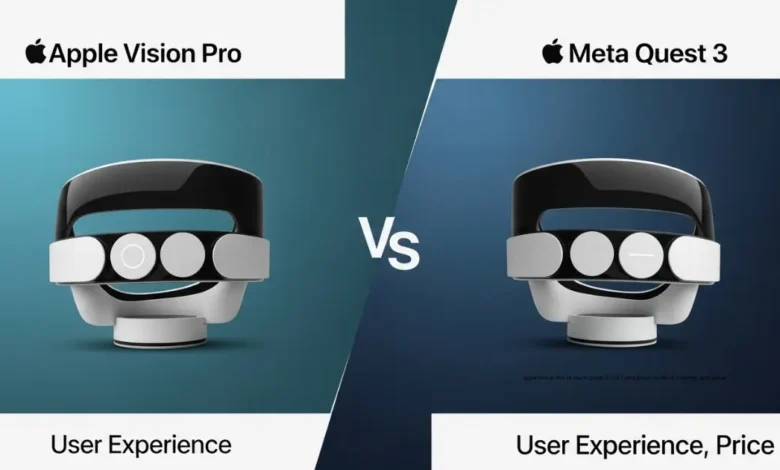
The Apple Vision Pro vs Meta Quest 3 debate is one of the most important discussions in the mixed reality space today. While both devices fall under the same broad category of spatial computing and virtual reality, they are built with fundamentally different philosophies. The Apple Vision Pro vs Meta Quest 3 comparison reveals a clear divide between a premium productivity-focused ecosystem and a more accessible, entertainment-driven platform.
Understanding the real-world differences in the Apple Vision Pro vs Meta Quest 3 experience is essential, especially for users trying to decide which device fits their daily workflow, entertainment needs, and budget.
At the center of this comparison are two major players: Apple Vision Pro and Meta Quest 3. Each represents a different vision for the future of computing, and each excels in specific use cases.
Read Also:
iOS 27 and iPhone 18 Pro Leaks: Apple’s AI-Focused Future
Apple Vision Pro vs Meta Quest 3: Work and Productivity in Real Life
When it comes to productivity, the Apple Vision Pro vs Meta Quest 3 gap becomes immediately clear. Apple positions its device as a “spatial computer,” not just a VR headset. With ultra-high-resolution Micro-OLED displays delivering around 23 million pixels, text clarity is exceptional. This allows users to read documents, edit spreadsheets, and manage workflows with a level of precision that closely resembles traditional monitors.
The Apple Vision Pro vs Meta Quest 3 comparison in this category heavily favors Apple for professional use. The headset integrates deeply with the Apple ecosystem, including Mac, iPhone, and iCloud. Users can open multiple floating windows, arrange them in physical space, and multitask in a way that feels natural and efficient.
On the other hand, the Apple Vision Pro vs Meta Quest 3 experience with Meta’s device is more flexible but less refined for productivity. The Quest 3 supports virtual workspaces through apps like Horizon Workrooms and third-party solutions, allowing users to connect both Windows and Mac systems. However, text clarity is noticeably lower, which can impact long work sessions.
That said, the Apple Vision Pro vs Meta Quest 3 comparison is not entirely one-sided. Quest 3 offers more flexibility in multi-device setups, especially for users who operate across different platforms. For some workflows, this cross-compatibility can be a practical advantage.
Apple Vision Pro vs Meta Quest 3: Gaming and Entertainment Experience
In the gaming category, the Apple Vision Pro vs Meta Quest 3 comparison flips completely. The Quest 3 dominates this space with a massive library of over 500 games and a mature ecosystem built around immersive gameplay.
The Apple Vision Pro vs Meta Quest 3 difference here is driven by design intent. Meta has spent years refining gaming experiences, complete with physical controllers that provide precise input for action-heavy games, sports simulations, and fitness applications.
The Quest 3 also excels in mixed reality gaming, transforming real-world environments into interactive playgrounds. This makes the Apple Vision Pro vs Meta Quest 3 choice obvious for users primarily interested in entertainment and active engagement.
In contrast, the Apple Vision Pro vs Meta Quest 3 experience on Apple’s side is more passive and cinematic. While gaming support exists, the library is still limited. Instead, Apple focuses on high-quality media consumption, offering a theater-like experience for streaming platforms with stunning 4K resolution per eye.
For users who prioritize movies, immersive video, and premium visuals, the Apple Vision Pro vs Meta Quest 3 comparison may still lean toward Apple—but strictly for content consumption rather than interactive gaming.
Apple Vision Pro vs Meta Quest 3: User Experience and Interaction
The Apple Vision Pro vs Meta Quest 3 user experience highlights one of the most significant technological differences between the two devices.
Apple’s headset relies entirely on eye tracking and hand gestures. Users simply look at an interface element and perform a subtle finger movement to select it. This creates a seamless, almost “invisible” interface that feels intuitive and futuristic.
In the Apple Vision Pro vs Meta Quest 3 comparison, this gives Apple a clear advantage in usability for productivity and casual interaction.
Meta’s approach, however, is more traditional. The Quest 3 primarily uses physical controllers, which are highly effective for gaming but less natural for general navigation. While hand tracking is supported, it is not as precise or reliable as Apple’s system.
This difference reinforces the broader theme in the Apple Vision Pro vs Meta Quest 3 debate: Apple prioritizes natural interaction, while Meta prioritizes control and responsiveness.
Apple Vision Pro vs Meta Quest 3: Design, Comfort, and Price
Physical design and pricing are critical factors in the Apple Vision Pro vs Meta Quest 3 decision.
The Quest 3 is lighter, weighing around 515 grams, and includes an internal battery. This makes it more convenient for extended sessions, especially during active use like gaming or fitness.
In contrast, the Apple Vision Pro is heavier—exceeding 600 grams—and relies on an external battery pack connected via cable. This design can feel restrictive, particularly for users who want freedom of movement.
Price is where the Apple Vision Pro vs Meta Quest 3 gap becomes dramatic. The Quest 3 starts at around $499, making it accessible to a wide audience. Meanwhile, the Vision Pro starts at $3,499, positioning it firmly in the premium category.
This pricing difference alone defines much of the Apple Vision Pro vs Meta Quest 3 market segmentation.
The Apple Vision Pro vs Meta Quest 3 comparison ultimately comes down to purpose.
Choose the Quest 3 if your priority is gaming, fitness, and social VR experiences at an affordable price. It delivers unmatched value in entertainment and interactive content.
Choose the Vision Pro if you are deeply invested in the Apple ecosystem and want a high-end productivity tool with industry-leading display quality and advanced spatial computing capabilities.
The key takeaway from the Apple Vision Pro vs Meta Quest 3 debate is simple: these devices are not direct competitors in the traditional sense. They represent two different visions of the future—one centered on entertainment, and the other on redefining how we work and interact with digital content.
Frequently Asked Questions
Which is better for work: Apple Vision Pro or Meta Quest 3?
Apple Vision Pro is significantly better for productivity due to its display clarity and ecosystem integration.
Which device is better for gaming?
Meta Quest 3 is the clear winner thanks to its large game library and controller-based interaction.
Is Apple Vision Pro worth the price?
It depends on your use case. For productivity and premium media experiences, it may justify the cost.
Can Meta Quest 3 replace a computer?
Not fully. While it supports virtual workspaces, it lacks the clarity and system integration needed for full productivity replacement.
Discover more from Feenanoor
Subscribe to get the latest posts sent to your email.