AI Finance Future: How Intelligent Systems Are Redefining the Global Economy
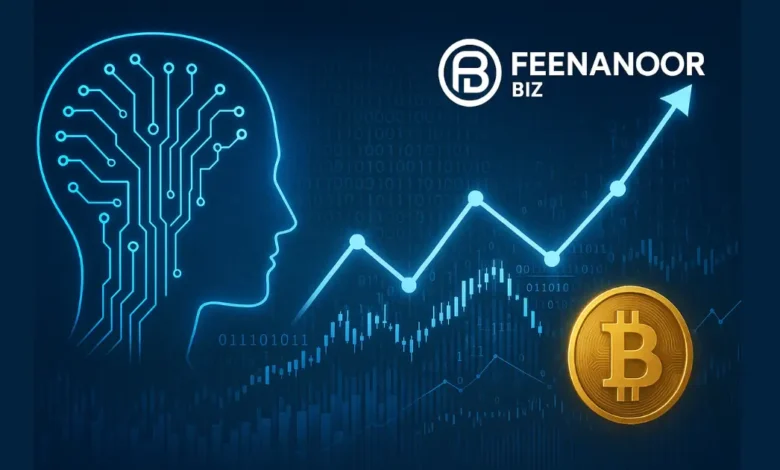
AI Finance Future explores how artificial intelligence is transforming global economics — from digital currencies and autonomous trading to algorithmic decision-making that reshapes the meaning of money.
Table of Contents
AI Finance Future: The Rise of Intelligent Money Systems
The financial world of 2025 is no longer guided solely by human intuition or institutional policies. Artificial intelligence has become the silent architect behind markets, credit systems, and monetary flows.
From central banks adopting AI to analyze inflation dynamics to hedge funds running entire portfolios through machine learning models, finance is entering a post-human era — an age where algorithms not only predict but also act.
How AI is Rewriting the Rules of Finance
1️⃣ Algorithmic Trading
Advanced neural networks execute millions of micro-transactions per second, adjusting to volatility faster than any human could.
These systems learn from global data streams — social media sentiment, energy consumption, political instability — and transform that information into trading decisions in real time.
2️⃣ Credit and Risk Assessment
Banks now use AI to model risk not just from income but from behavior — spending patterns, communication tone, and geolocation stability. It’s accurate, but it raises questions about bias and privacy.
3️⃣ Financial Forecasting
AI driven models simulate entire economies under different scenarios — from climate change to resource shortages — allowing governments and investors to see 10 years ahead in hours.
From Data to Currency: The New Definition of Money
AI is transforming money from a static store of value into a dynamic data entity.
Cryptocurrencies and central bank digital currencies (CBDCs) are evolving into smart, adaptive assets that change based on economic conditions and user behavior.
Imagine currencies that inflate or deflate automatically based on regional consumption data, or loans that adjust interest rates through AI evaluations of a nation’s economic health.
That future is closer than it appears.
Read Also :
Bitcoin Records Dip Below $100,000 as Institutional Liquidity Retreats
Crypto Wallets Guide: A Complete Beginner’s Guide to Digital Asset Security
The Moral and Economic Dilemma
As AI takes greater control over financial flows, the central question becomes: Who controls the intelligence that controls money?
If algorithms are owned by a few corporations or governments, financial power could become more centralized than ever — contradicting the decentralization promised by blockchain.
On the other hand, decentralized AI networks could create an open financial ecosystem where machines and humans co-decide policy based on transparent data.
This is the philosophical battle that will define the next decade.
AI in DeFi: Smart Contracts with Cognition
The integration of AI into DeFi is creating autonomous financial agents that manage liquidity, identify arbitrage opportunities, and even build self-correcting governance structures.
Smart contracts no longer just execute rules — they learn.
For example: a DeFi protocol can analyze market stress and automatically adjust collateral ratios to prevent systemic collapse.
This level of autonomy marks the birth of a new financial species: the thinking market.
The Global Impact on Labor and Wealth
AI-driven finance is reshaping labor markets.
Millions of traditional banking and trading jobs are disappearing, while new roles emerge in AI model training, data ethics, and blockchain compliance.
Wealth distribution will depend on access to computational resources rather than capital alone — a shift that could either democratize finance or widen the gap between tech-rich and data-poor societies.
Opportunities for Emerging Markets
Emerging economies in Asia, Africa, and the Middle East are uniquely positioned to leapfrog legacy systems.
By embracing AI finance early, they can create intelligent micro-economies where transactions, credit, and investment flows are optimized through data rather than bureaucracy.
Feenanoor Biz will closely follow these transformations as they reshape the Gulf and beyond.
AI is not just redefining finance — it’s redefining human agency within it.
The future of money belongs to systems that can think, learn, and adapt faster than humans ever could.
Whether this leads to economic empowerment or algorithmic control depends on how we govern the intelligence we’re creating today.
FAQ
1. Will AI replace human traders completely?
Not entirely — humans will shift toward strategy, governance, and ethical oversight while AI handles execution and analysis.
2. Is AI finance safe from manipulation?
No system is foolproof, but decentralized AI and transparent algorithms can reduce systemic risks dramatically.
3. How does AI affect cryptocurrency markets?
It amplifies efficiency and liquidity but also increases volatility through algorithmic trading patterns.
4. Will AI finance create new currencies?
Yes, expect adaptive currencies whose value responds to real-time economic and behavioral data.
Discover more from Feenanoor
Subscribe to get the latest posts sent to your email.